
 Products
 Bars
Bars
 Beads & Spheres
 Bolts & Nuts
 Crucibles
 Discs
Discs
 Fibers & Fabrics
 Films
Films
 Flake
Flake
 Foams
Foams
 Foil
Foil
 Granules
 Honeycombs
 Ink
Ink
 Laminate
 Lumps
Lumps
 Meshes
 Metallised Film
 Plate
Plate
 Powders
 Rod
Rod
 Sheets
 Single Crystals
 Sputtering Target
 Tubes
Tubes
 Washer
 Wires
Wires
 Converters & Calculators
 Write for Us



How Lithium Niobate Is Utilized for Refractive Index Measurement
Due to its exceptional electro-optic, piezoelectric, and nonlinear optical properties, lithium niobate possesses a vital application from wide-ranging telecommunications to research in photonics. Its most basic application among many is refractive index measurement—both as the target measurement object itself and as a tool for precision optical index measurement of other substances.
1. What Is Refractive Index
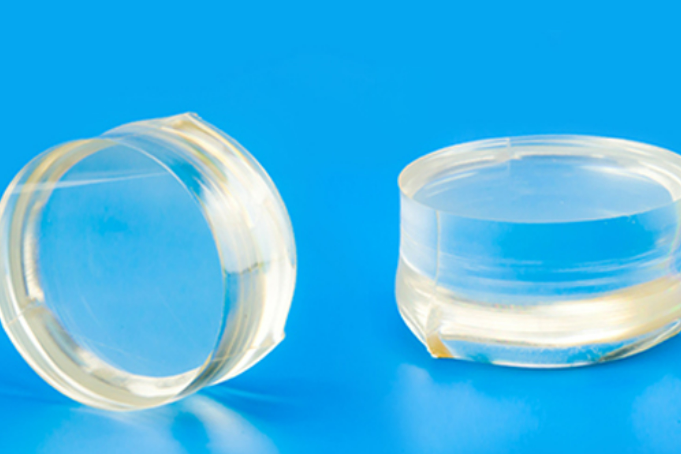
Refractive index, usually symbolized as n, is a measure of the amount of light that bends, or refracts, when traveling through a substance. It's a fundamental optical parameter defining the focusing of light by lenses, transmission in optical fiber of an impulse, and action of crystals in interaction with electromagnetic waves. Refractive index measurements have to be accurate in order to design lasers, modulators, sensors, and waveguides.
The optical properties of lithium niobate are anisotropic—it is a uniaxial crystal, i.e., it has only one optical axis. Therefore, it is birefringent, having two different refractive indices:
• Ordinary refractive index (nₒ) – for light polarized perpendicular to the optical axis.
• Extraordinary refractive index (nₑ) – for light polarized parallel to the optical axis.
Birefringence is not so much a property—it is a useful tool for the analysis and manipulation of light.

[1]
2. Lithium Niobate's Optical Properties
Typical refractive indices of congruent lithium niobate at 633 nm and room temperature are:
•nₒ ≈ 2.286
•nₑ ≈ 2.203
They are dependent on wavelength, temperature, and composition (stoichiometric or congruent LiNbO₃). Researchers have derived Sellmeier equations to describe this wavelength dependence. A representative equation for the ordinary ray is:
nₒ^2(λ) = 5.35583 + 0.100473/ (λ^2 - 0.20692^2) + 100/(λ^2 - 11.34927^2)
where λ is wavelength in micrometers.
This optically highly specified response makes lithium niobate a calibrant material for refractive index measuring instruments and a subject of investigation in temperature- or wavelength-dependent refractometry.
3. Techniques Utilizing Lithium Niobate to Refractive Index Measurement
(a) Prism Coupling (m-line) Technique
Prism coupling is one of the most common methods, where a laser beam is transmitted through an Index prism near in touch with a lithium niobate sample or thin film. On the basis of the angle of incidence, researchers observe clear "m-lines" that are related to guided optical modes. Based on mode angles, the effective refractive index of the film or substrate can be determined precisely.
Lithium niobate prisms are particularly favored in this technique due to their:
•Low scattering loss and optical quality,
•Overall refractive index stability across an extremely broad wavelength regime, and
•Comformability with both infrared and visible sources of light.
The technique can be configured to provide refractive index accuracy of greater than 10⁻⁴ and is therefore a highly sought tool in waveguide characterization.
(b) Ellipsometry
In thin-film optics, ellipsometry is employed to detect polarization changes of reflected light from a surface. In lithium niobate film growth on substrate materials such as sapphire or silicon, ellipsometric measurements are applied to quantify the film thickness and the dispersion of the refractive index.
Lithium niobate is anisotropic, and therefore VASE is typically employed. That facilitates full tensor characterization—measurement of the wavelength dependence of the ordinary and the extraordinary indices.
(c) Interferometry
Michelson or Mach–Zehnder interferometer arrangements can be used for the detection of very minor refractive index variations. Lithium niobate, due to its large electro-optic effect (electric field-dependent refractive index), is an ideal material to test such a setup.
By applying controlled voltage to a lithium niobate crystal, researchers are actually capable of viewing phase shifts of the interference fringes, from which they derive a change in refractive index (Δn). The property is also applied for interferometer calibration with the aim to measure refractive index variation in gases, liquids, and other solids with accuracy.
(d) Temperature-Dependent Refractometry
Since lithium niobate is temperature-dependent refractive index, lithium niobate also has uses in thermally determining thermo-optic coefficients. It is common to step-heat the crystal with known values and angular displacement in transmitted or reflected beams.
For example, studies have shown thermo-optic coefficients (dn/dT) for LiNbO₃ are approximately:
•dnₒ/dT ≈ 3.9 × 10⁻⁵ K⁻¹
•dnₑ/dT ≈ 3.2 × 10⁻⁵ K⁻¹
This information is of great usefulness in the design of temperature-insensitive optical devices like frequency doublers and modulators.
4. Case Example: Refractive Index Calibration in Optical Waveguide Fabrication
Lithium niobate serves as both substrate material and the refractive index reference for integrated optical circuit manufacturing. Titanium is diffused into the surface of the crystal to raise the local refractive index by ~0.003 to 0.010 in the case of waveguide manufacturing in Ti:LiNbO₃.
To verify such a modification, engineers calculate mode propagation angles based on the prism-coupling technique outlined above. The reliable knowledge of the baseline refractive indices of lithium niobate makes it simple to compute diffusion depth and optical mode confinement precisely.
This ensures that resulting devices—Mach–Zehnder modulators, optical switches, and phase shifters—operate best in telecommunication networks.
Further reading: Lithium Tantalate vs. Lithium Niobate Wafers: A Comprehensive Comparison for Tech Enthusiasts
5. Why Lithium Niobate Dominates Optical Metrology
The usefulness of lithium niobate for refractive index measurement relies on the combination of:
•High optical transparency (350 nm to 5 μm)
•Reproducible, stable refractive indices
•Surface polishability at high levels
•Possessing a high electro-optic response that allows active tuning and modulation
These characteristics make it both an active material platform for future optical metrology devices as well as a passive measurement subject material.
6. Conclusion
From its initial employment as a refractive index calibration compound to dynamic electro-optic measurement, lithium niobate has been and remains an indispensable tool for optical science. Its birefringence, temperature stability, and well-established fabrication processes allow scientists and engineers to investigate the very roots of light–matter interaction. For more advanced optical materials, please check Stanford Advanced Materials (SAM).
Reference:
[1] Andrienko, Denis. (2018). Introduction to liquid crystals. Journal of Molecular Liquids. 267. 10.1016/j.molliq.2018.01.175.
 Chin Trento