
 Products
 Bars
Bars
 Beads & Spheres
 Bolts & Nuts
 Crucibles
 Discs
Discs
 Fibers & Fabrics
 Films
Films
 Flake
Flake
 Foams
Foams
 Foil
Foil
 Granules
 Honeycombs
 Ink
Ink
 Laminate
 Lumps
Lumps
 Meshes
 Metallised Film
 Plate
Plate
 Powders
 Rod
Rod
 Sheets
 Single Crystals
 Sputtering Target
 Tubes
Tubes
 Washer
 Wires
Wires
 Converters & Calculators
 Write for Us



iPhone 17 Pro: Aluminum Frame vs. Titanium Frame, Which One Is Better?
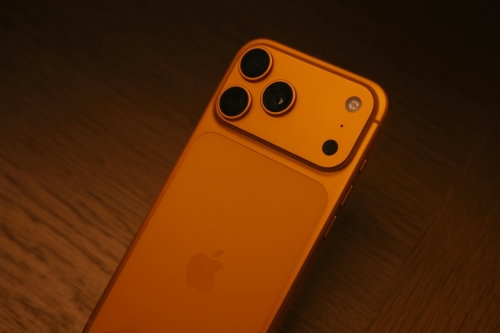
Apple recently released the iPhone 17 Pro, and of course, as always, the launch has created a storm of debate on the web. One of the most debated topics by fans and buyers both is the change of material on the exterior: Apple has moved away from the titanium alloy on the iPhone 15 Pro to aluminum again on the frame. For everyday users, this may seem like a minor detail, but for engineers, material scientists, and consumers who care about durability, weight, and tactile experience, this switch carries significant implications.
1. Aluminum vs. Titanium: Fundamental Material Properties
Aluminum (Al) and titanium (Ti) are both widely regarded as “lightweight metals,” but their properties are quite different. Understanding these differences requires looking at density, strength, corrosion resistance, and cost.
•Density: Aluminum's density is about 2.70 g/cm³, while titanium's density is about 4.50 g/cm³. This means that for the same volume, titanium is about 66% denser than aluminum. From a practical perspective, a titanium phone frame will feel much heavier compared to an aluminum one, and it generates a premium feel but lacks portability.
•Strength: Titanium alloys such as Ti-6Al-4V have tensile strengths of some 900 MPa, whereas high-quality aluminum alloys such as 7000-series aluminum have 500–600 MPa. Though aluminum can be anodized to enhance surface hardness, titanium is stronger and more resistant to stress deformation by nature.
• Elastic Modulus: Titanium has an elastic modulus of 105–120 GPa, while that of aluminum is 69 GPa. A higher elastic modulus means that titanium is more rigid and less prone to bending, which is a plus in devices subject to pressure or impact.
• Corrosion Resistance: Both materials are resistant to corrosion but titanium also has a naturally occurring thick protective oxide layer (TiO₂) that is resistant to oxidation even in the harshest of environments, like saltwater. Aluminum does form an oxide layer (Al₂O₃) but does tend to pit corrosion under certain conditions. In smartphone application, this typically translates into both materials being extremely resilient, but titanium will probably hold up longer looking under the worst conditions.
• Thermal Conductivity: Aluminum has higher thermal conductivity (around 235 W/m·K) compared to titanium (21.9 W/m·K). It means aluminum is a better conductor of heat, which allows it to cool the phone when used excessively or charged at high speed.
• Manufacturing and Cost: Titanium is significantly more expensive than aluminum, both raw material cost and the cost of machining. The hardness and toughness of Titanium also make it harder to machine and polish, which might have been a factor from Apple's side from a cost and production angle. Aluminum is easier to mold, anodize, and finish in bulk.
2. Weight Factors and Ergonomics
One of the first things users will notice when using the iPhone 17 Pro is how light it is.
Apple's transition to aluminum keeps the overall weight of the phone lighter than a titanium frame, which can improve ergonomics and reduce fatigue for handheld use over long periods of time. Yet, in the iPhone 17 series, the weight varies by model — Pro, Air, and the standard version. Please refer to Apple’s official website for exact figures.
Further reading: What is the Material of Your Phone Body?
3. Thermal and Structural Implications for Smartphone Design
The metal selection also has implications for thermal management.
Aluminum's higher thermal conductivity helps draw heat away from the processor and battery, potentially helping the phone perform better during sustained loads. Titanium's lower conductivity lets heat become localized with minimal effort, which is one reason that it may not have been the best choice for all smartphone designs despite its mechanical advantages. Aluminum's lower stiffness also makes it a little more resistant to pressure, which will keep glass panels from cracking under normal use due to impacts.
4. Environmental and Cost Considerations
Recycling is cheaper for aluminum and costs the environment less per kilogram compared to titanium, from a sustainability viewpoint. Aluminum is also more abundant, thus production is held at a lower cost while giving Apple more pricing leverage on the devices. Titanium, while durable and premium, is not as abundant and requires more energy-intensive extraction and processing.
5. Applications beyond Smartphones
Understanding the difference between aluminum and titanium extends beyond cell phones.
•Aerospace: Titanium is utilized in aircraft components where resistance to high temperatures and strength-to-weight ratio matter. Aluminum dominates in buildings where weight savings and economy rank as priorities.
•Medical Devices: Titanium is biocompatible and used extensively for implants, whereas aluminum's lower strength and less-than-optimal biocompatibility limit use in medical devices.
• Consumer Electronics: Aluminum is widely used on laptops, tablets, and smartphones because it is light in weight, easy to produce, and sufficiently durable. Titanium remains niche, reserved for premium devices or ruggedized applications.
6. How to Choose
Apple's move back to aluminum from titanium in the iPhone 17 Pro appears to be a thoughtful tradeoff between weight, cost, thermal management, and manufacturability. While titanium adds more strength, scratch resistance, and a premium feel, aluminum provides less weight, more heat conductivity, and lower cost appropriate to mass-market smartphone manufacturing.
For consumers, the choice is purely a matter of taste: titanium is high-end and durable, whereas aluminum offers lightness, simplicity, and utilitarian usability. The iPhone 17 Pro's aluminum construction may not be as "premium" as titanium, but its advantage in everyday ergonomics and heat efficiency makes sense in both engineering and commercial terms.
Through the exploration of such material qualities, we can appreciate the subtle but profound manner in which material science is experienced in the devices we interact with every day. Aluminum is ubiquitous, yet one of the most versatile and efficient metals of contemporary consumer electronics—a behind-the-scenes hero behind the thin facade of the iPhone 17 Pro. For more metal products and specific data, please check Stanford Advanced Materials (SAM).
 Chin Trento